
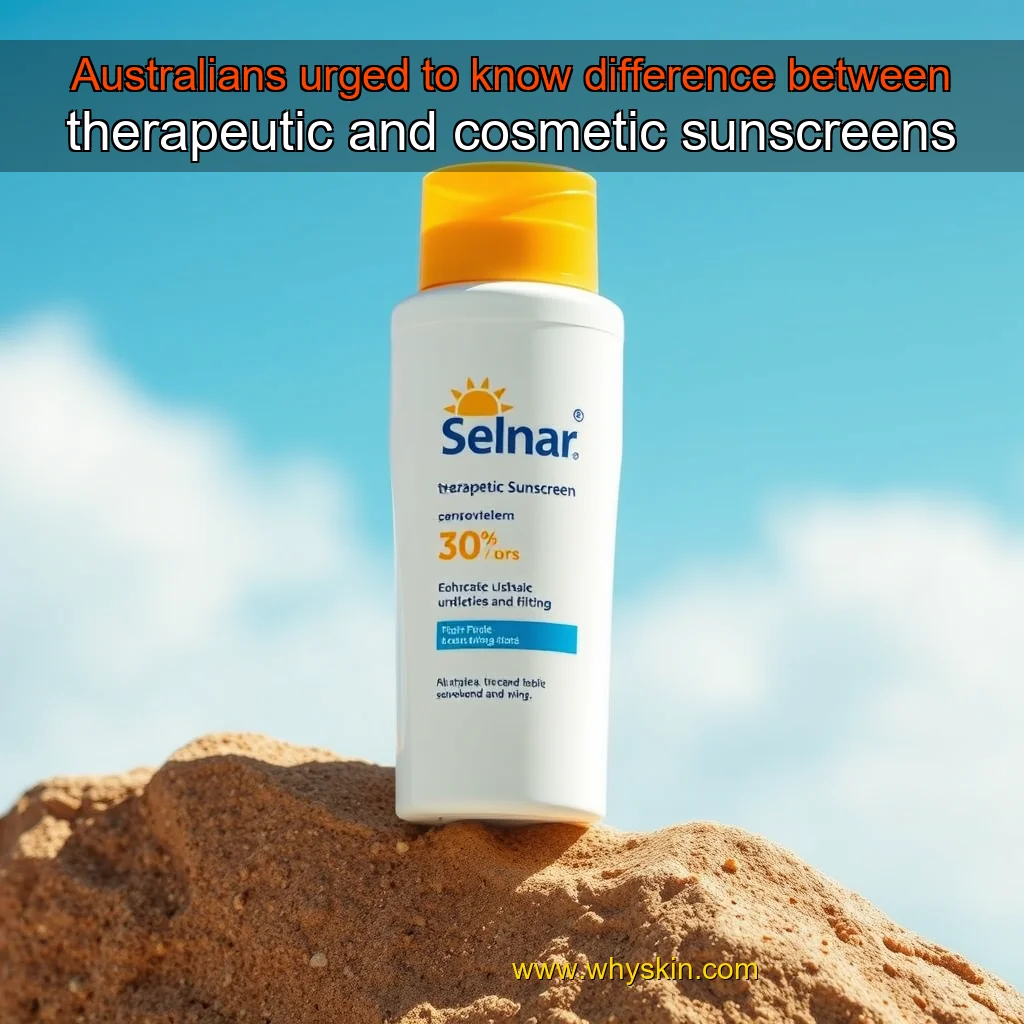
The Struggle for Sunscreen Regulation
Australia’s strict sunscreen regulations are designed to protect its citizens from the harsh effects of the sun. The Therapeutic Goods Administration (TGA) is responsible for enforcing these regulations, which require sunscreens to contain a minimum amount of active ingredients to provide adequate protection against UV radiation. However, some companies have been found to be exploiting loopholes in the system to sell “sun protection” products that do not meet the required standards.
The Loopholes in Sunscreen Regulation
“It’s a minefield out there,” she said. “You can’t trust what you see, and you can’t trust what you read.”
The Impact of Social Media on Consumer Behavior
Social media has become an integral part of modern life, with billions of people around the world using platforms like Facebook, Instagram, and Twitter to connect with others, share information, and consume products. However, the rise of social media has also had a profound impact on consumer behavior, particularly among young women.
The Problem of Misinformation
One of the most significant challenges facing consumers today is the spread of misinformation on social media. With the rise of fake news, propaganda, and manipulated content, it’s becoming increasingly difficult for consumers to distinguish between fact and fiction. This can lead to confusion, anxiety, and even financial loss. Some of the most common types of misinformation on social media include: + Fake news articles and videos + Manipulated images and videos + Phishing scams and online harassment + Misleading product reviews and ratings
title
The Role of Social Media in Consumer Decision-Making
Social media plays a significant role in consumer decision-making, particularly among young women. According to a recent study, 70% of women aged 18-24 use social media to research products before making a purchase.
This is because the TGA regulates the sale of sunscreens in Australia, and the number indicates the approval number of the product.
Understanding TGA-Regulated Sunscreens in Australia
The Therapeutic Goods Administration (TGA) is a government agency responsible for regulating the sale of therapeutic goods in Australia, including sunscreens.
SPF stands for Sun Protection Factor, and it measures the amount of time it takes for the sun’s ultraviolet (UV) rays to cause sunburn on protected skin. The higher the SPF, the longer it takes for sunburn to occur. For example, SPF 30 filters out 96.7% of UVB rays, while SPF 50 filters out 98.5% of UVB rays.
Understanding SPF: A Guide to Sun Protection
What is SPF? SPF is a measure of how well a sunscreen protects the skin from sunburn. It is calculated based on the amount of time it takes for the sun’s ultraviolet (UV) rays to cause sunburn on protected skin. ### How Does SPF Work? SPF works by filtering out UVB rays, which are the primary cause of sunburn. UVB rays have a shorter wavelength and are more easily filtered out by sunscreen.
Moisturizers and creams with SPF 30 or more. Sunscreens in stick form with SPF 30 or more. Sunscreens in spray form with SPF 30 or more.
While it may provide some protection against the sun’s harmful rays, it is not a substitute for a proper sun protection plan.
Understanding the Risks of UV Radiation
UV radiation from the sun or tanning beds is a major risk factor for skin cancer. According to the American Academy of Dermatology, 90% of skin cancers are caused by UV radiation.
The Importance of Sunscreen
Sunscreen is a crucial component of any skincare routine, and its importance cannot be overstated. Not only does it protect the skin from the harsh effects of the sun’s ultraviolet (UV) rays, but it also helps to prevent premature aging and skin cancer.
The Dangers of UV Radiation
UV radiation is a major contributor to skin damage and skin cancer. When UV rays penetrate the skin, they can cause damage to the DNA of skin cells, leading to mutations and potentially life-threatening conditions such as melanoma.
The campaign, which was launched in 1983, aimed to educate the public about the importance of sun protection in preventing skin cancer. The campaign’s message was simple yet effective: to “slip” on a shirt, “slop” on some sunscreen, and “slap” on a hat to protect your skin from the sun’s harmful rays.
The Origins of the Campaign
The Cancer Council’s “slip, slop, slap” campaign was born out of a need to raise awareness about the growing problem of skin cancer in Australia. In the early 1980s, the country was experiencing a surge in skin cancer cases, with the number of new cases increasing by over 50% in just a few years. The Cancer Council, a non-profit organization dedicated to cancer research and prevention, recognized the need for a public awareness campaign to educate the public about the risks of skin cancer and the importance of sun protection.
The Campaign’s Key Messages
The “slip, slop, slap” campaign was designed to convey three simple yet crucial messages:
The Risks of Homemade Sunscreens
The Australian government’s Therapeutic Goods Administration (TGA) has issued a warning about the dangers of using homemade sunscreens. These products, often created by individuals or small businesses, can pose significant risks to consumers. The TGA strongly advises against using homemade sunscreens, which have been shown to offer minimal protection.
What Makes Homemade Sunscreens a Risk
The Dangers of Using Homemade Sunscreens
Using homemade sunscreens can lead to a range of health problems, including:
The Risks of Buying Unapproved Products from Overseas
The TGA also warns consumers about the risks of buying unapproved products from overseas. These products may not meet the same safety and efficacy standards as commercial products, and can pose significant risks to consumers.
The girls, who were 13 and 14 years old at the time, were concerned about the safety of these products. They decided to investigate further and started a petition to raise awareness about the lack of regulation in the case of cosmetic products for sun protection.
The Rise of Unregulated Cosmetic Products
The lack of regulation in the cosmetic industry has led to a proliferation of products claiming to provide sun protection, but often failing to deliver. This has resulted in a significant increase in deaths from non-melanoma skin cancer.
The Problem with Unregulated Products
The Girls’ Investigation
Ella, Summer, and Emily, who were 13 and 14 years old at the time, decided to investigate further and started a petition to raise awareness about the lack of regulation in the case of cosmetic products for sun protection. They scoured the internet for information on the products and their ingredients. They spoke to experts in the field, including dermatologists and scientists. They gathered data on the number of deaths from non-melanoma skin cancer and the lack of regulation in the cosmetic industry.
The Petition and Its Impact
The girls’ petition gained significant attention and support from the public, with many people expressing their concern about the lack of regulation in the cosmetic industry. The petition was signed by thousands of people, including celebrities and influencers.
“That’s simply not true. “UV exposure is a bit like smoking: every cigarette causes damage, and every time you’re out in the sun, UV radiation causes damage.”

news is a contributor at WhySkin. We are committed to providing well-researched, accurate, and valuable content to our readers.


