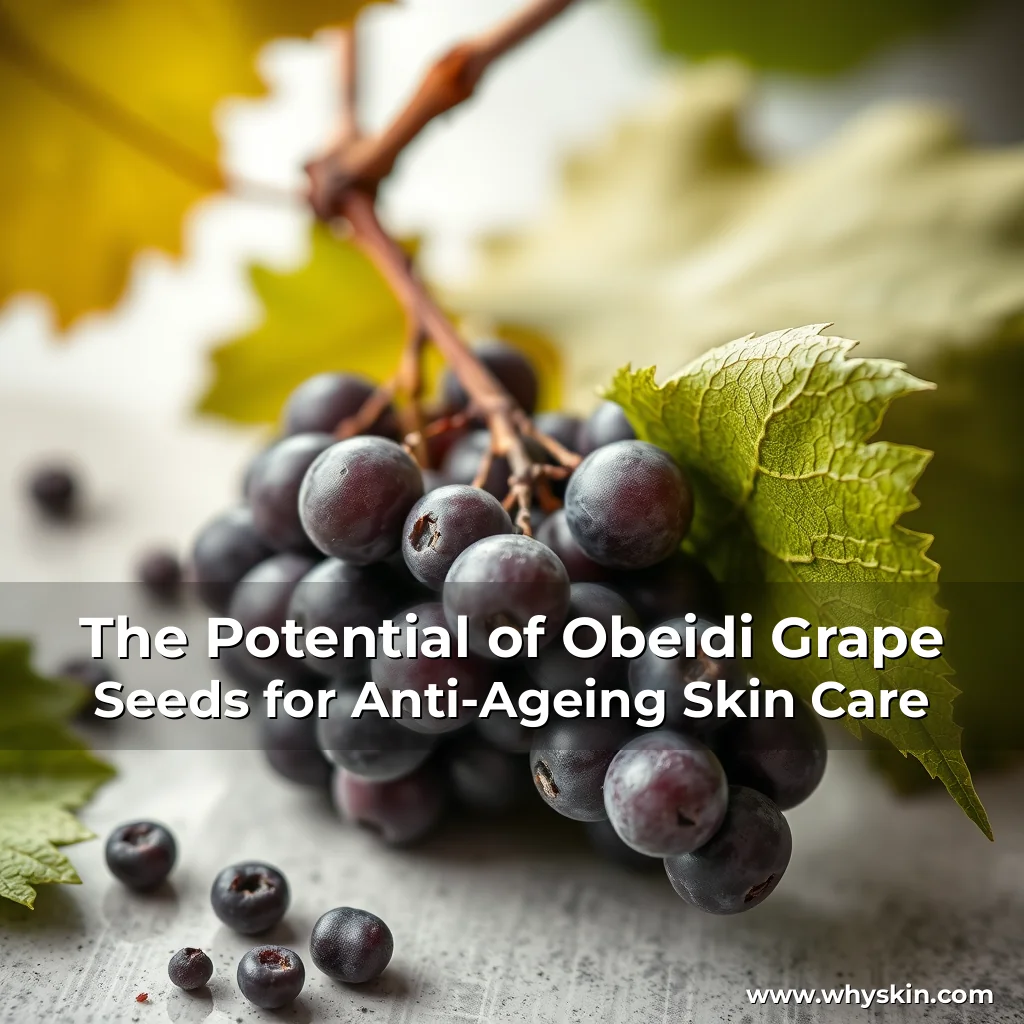
The Obeidi grape variety, native to Lebanon, is being explored as a potential source of polyphenols for anti-ageing skin care. Researchers from Université Saint-Joseph, the University of Cagliari, and Saint George Hospital University Medical Center have made significant discoveries on the subject.
The Power of Polyphenols
Polyphenols are a class of antioxidants that can help protect the skin from oxidative stress caused by UV exposure, pollution, and other environmental stressors. They have been shown to have anti-inflammatory and anti-aging effects, making them a popular ingredient in skincare products.
The Importance of Grape Seed Extract
Grape seed extract, rich in polyphenols, is a well-known antioxidant that has been studied for its potential anti-ageing benefits. However, its stability and penetration through the skin barrier have been a challenge. Researchers have encapsulated polyphenol-rich extract from Obeidi grape seeds into nano-carriers known as hyalurosomes, which have shown promising results.
The Nanotechnology Breakthrough
Hyalurosomes are phospholipid vesicles combined with hyaluronic acid, a common skin care ingredient. The researchers created two types of hyalurosomes: standard liposomes and hyalurosomes. The resulting vesicles were stable at refrigeration temperature for up to three months, with an average size of 148 to 159 nanometres. More than 97% of the antioxidant compounds were successfully encapsulated.
Benefits for Skin Health
The hyalurosome formulation increased cell viability by up to 144%, suggesting both safety and a potential to stimulate cell regeneration. The hyalurosomes not only protected the skin cells from oxidative stress but also promoted their growth — a strong signal of anti-ageing potential.
Human Study Confirms Skin Care Benefits
A clinical trial involving 40 women divided into two groups was conducted. One group received a serum containing the grape seed extract in hyalurosomes, while the other received a placebo version of the same formulation without the extract.
- The results showed that the extract-loaded serum led to a statistically significant improvement in skin hydration, with a large effect size.
- There was also a visible reduction in wrinkle depth around the eyes, especially in lateral canthal lines (more commonly known as ‘crow’s feet’).
- The polyphenol serum softened fine lines, as confirmed by the ARAMO imaging system.
Reduced Oxidative Stress
The study found that the extract-loaded serum reduced oxidative stress, which is a major contributor to skin aging. This was confirmed by the reduction in erythema (redness) and an increase in hydration levels.
Potential for Wider Cosmeceutical Use
The study built on previous research showing that grape-derived polyphenols could protect skin from UV damage, reduce inflammation, and stimulate collagen production. However, this was one of the few clinical studies that tests a full product using grape seed extract delivered through a novel nanocarrier.
Advantages of Hyalurosome Formulation
The hyalurosome formulation is considered an advantage, as hyaluronic acid can increase product viscosity and skin adherence while enhancing active ingredient delivery. It also addresses a common challenge in using natural extracts: ensuring their stability and penetration through the skin barrier.
Commercial Implications and Next Steps
The findings could have implications for cosmetic and skincare manufacturers looking to expand their anti-ageing portfolios with clinically validated, natural ingredients. The use of Lebanese Obeidi grape seeds also opens opportunities for regional branding and upcycled ingredient sourcing.
Conclusion
The study provides strong evidence for the potential of Obeidi grape seeds as a natural source of polyphenols for anti-ageing skin care. The use of hyalurosomes as a nanocarrier has shown promising results, and the commercial implications are significant. Further studies with larger sample sizes are needed to confirm long-term benefits and understand optimal dosing. However, the current findings are promising and suggest that polyphenol-enriched serum represent a promising approach to improving skin health and combating signs of ageing.

news is a contributor at WhySkin. We are committed to providing well-researched, accurate, and valuable content to our readers.