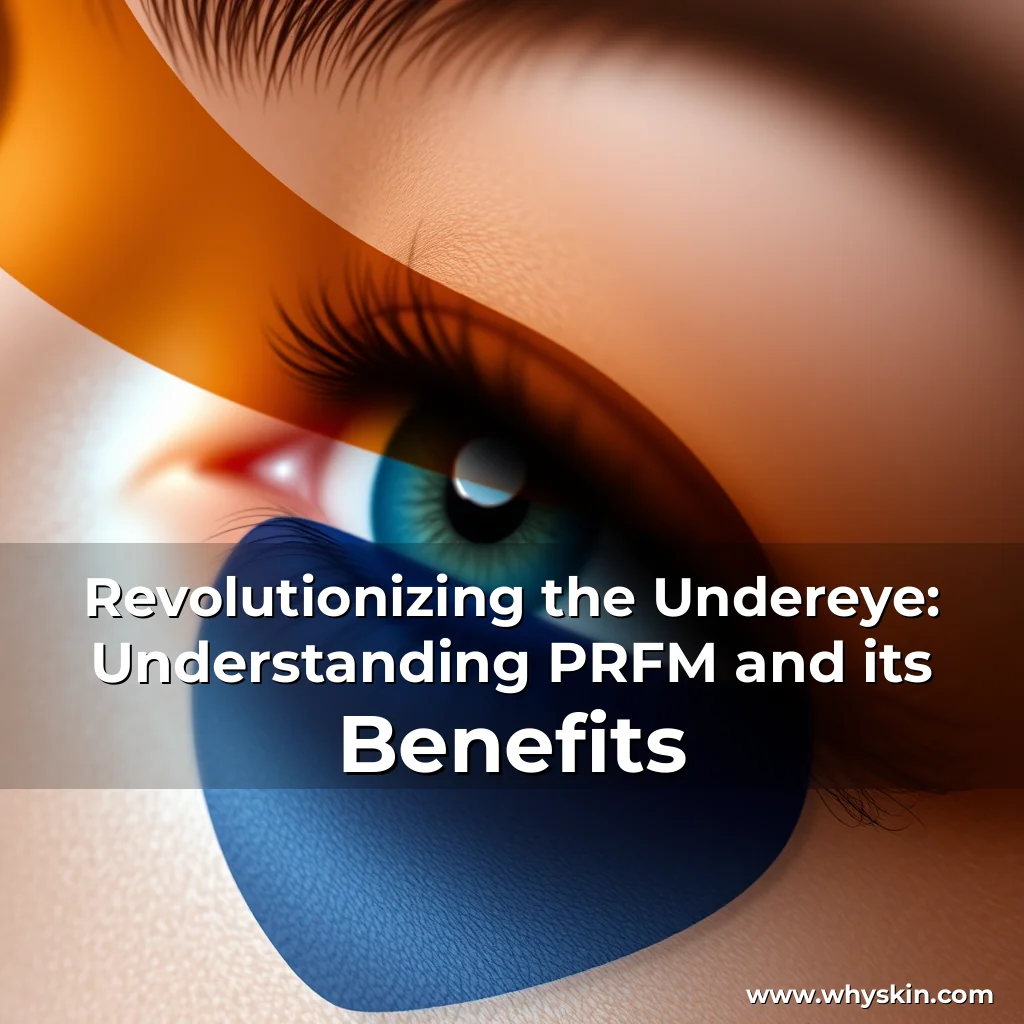
PRFM is an innovative treatment that’s gaining popularity in the beauty industry. As a needle-averse individual, I was thrilled to discover this alternative to traditional fillers and concealers. In this article, we’ll delve into the world of PRFM, exploring its benefits, how to prep for treatment, and my personal experience with the procedure.
What is PRFM?
PRFM is an advanced form of PRF (Platelet Rich Plasma), which uses components of a patient’s own blood to stimulate cellular renewal. Unlike traditional PRF, PRFM contains a fibrin matrix that holds growth factors in place, allowing for a slower, more controlled release over time.
“This makes PRFM particularly effective for delicate areas like the undereyes, where it can improve skin texture, fine lines, and dark circles,”
says Saami Khalifian, MD, FAAD, board-certified dermatologist and founder of SOM Aesthetics. PRFM is often recommended for those experiencing crepey undereye skin or fine lines due to collagen loss. It’s a safe treatment for all skin types and works well for patients in their late 20s to 50s who are noticing early signs of aging and diminishing skin quality.
Benefits of PRFM
- Improves skin health and texture
- Stimulates collagen production
- Provides long-term benefits
- Safe for all skin types
- Effective for delicate areas like the undereyes
PRFM aims to improve skin health and texture using your own blood, which is made up of plasma and a high concentration of platelets. As NYC-based JECT physician’s assistant Andriana Cellini, PA-C explains, platelets are commonly referred to as the first responders to an injury.
“Once PRP is injected to the affected area, the platelets become activated and release growth factors and proteins called cytokines that promote healing of the injured tissue,”
says Cellini. PRFM can be injected into the forehead, cheeks, and nasolabial folds, but the undereye is one of the more popular injection sites. Because this area is very delicate with thin tissue, using your own blood cells helps amplify your body’s natural ability to heal, allowing the platelet-rich plasma to rejuvenate your skin from the inside out.
How to Prep for PRFM
Preparing for PRFM treatment is fairly straightforward. Make sure to eat a good meal and hydrate beforehand to help with the blood draw and prevent lightheadedness. Avoid consuming alcohol for 24 hours pre-treatment, as this can increase your chances of bruising. If you’re prone to bruising, ask your provider about taking arnica supplements beforehand.
What Happens During PRFM?
The treatment begins with the provider drawing a small amount of blood from your arm. The blood then gets spun in a centrifuge to separate the PRP, which is subsequently converted and thickened into the soft gel known as PRFM.
“PRFM is then injected into the undereye region using a cannula [a tube to insert] a blunt needle that decreases the risk of a bruise and is a safer tool used in this delicate area,”
says Cellini. There’s minimal downtime with PRFM, and most people are able to return to their regular routines within one week. Immediately after the treatment, you should expect to experience swelling, which typically lasts a few days.
Cost and Aftercare
The cost of PRFM varies depending on provider, location, and other factors, typically ranging between $600 to $800 per session. Some providers offer bundled deals if you plan on getting a few sessions done, which is recommended to see the best results.
Risks and Side Effects
Aside from mild swelling, redness, and bruising at the injection site, PRFM is a generally well-tolerated procedure. Some patients may be sensitive to the calcium chloride that’s used to transfer the PRP into PRFM, but this sensitivity typically resolves on its own or with an over-the-counter antihistamine. The good news is that since PRFM is derived from your own blood cells, there’s no risk of an allergic reaction. And, because PRFM is not a filler, the risk of vascular occlusion or nerve damage is low, says Dr. Khalifian.
My PRFM Experience
I did three sessions of PRFM spaced roughly five weeks apart at JECT in West Hollywood. Each treatment began with me taking off all of my makeup with a makeup wipe. My provider then applied topical numbing cream on the under eye area and started the blood draw. From there, my blood was spun in a centrifuge for about 10 minutes—just the right amount of time for the numbing cream to kick in. The spun blood was mixed with calcium chloride to make it more concentrated, and then it was time to inject. The injecting portion took about two minutes and involved one poke on each side followed by the injection of the PRFM. My pain level was moderate to high, but I was able to manage it with the help of a facial vibrator and a support system.
I was definitely swollen after each treatment, but what I found interesting was that my swelling became less pronounced as the treatments went on. The duration of the swelling also decreased over time. Aside from the swelling, I didn’t experience bruising or any intense pain post-treatment—just a bit of tenderness that subsided after 24 hours. I’d like to reiterate that PRFM requires a minimum of three to six sessions spaced four to six weeks apart to see a difference. I describe my results as follows: I saw zero results after the first session, minimal results after the second session, and more apparent results after the third session. While my fine lines are still present, they’re definitely not as apparent and deep-set-looking as they previously were. The texture of the skin underneath my eyes has improved, and I’m finding that my concealer isn’t creasing as much as it used to. Overall, I’d say the treatment gave me subtle results that make me look more awake, refreshed, and youthful. I recommend this to anyone looking to combat collagen loss for more rejuvenated-looking undereyes.
Meet the Experts
Saami Khalifian, MD, FAAD, board-certified dermatologist and founder of SOM Aesthetics, has extensive experience in the field of aesthetics. Andriana Cellini, PA-C, NYC-based JECT physician’s assistant, has extensive knowledge in the treatment of cosmetic procedures.

news is a contributor at WhySkin. We are committed to providing well-researched, accurate, and valuable content to our readers.